
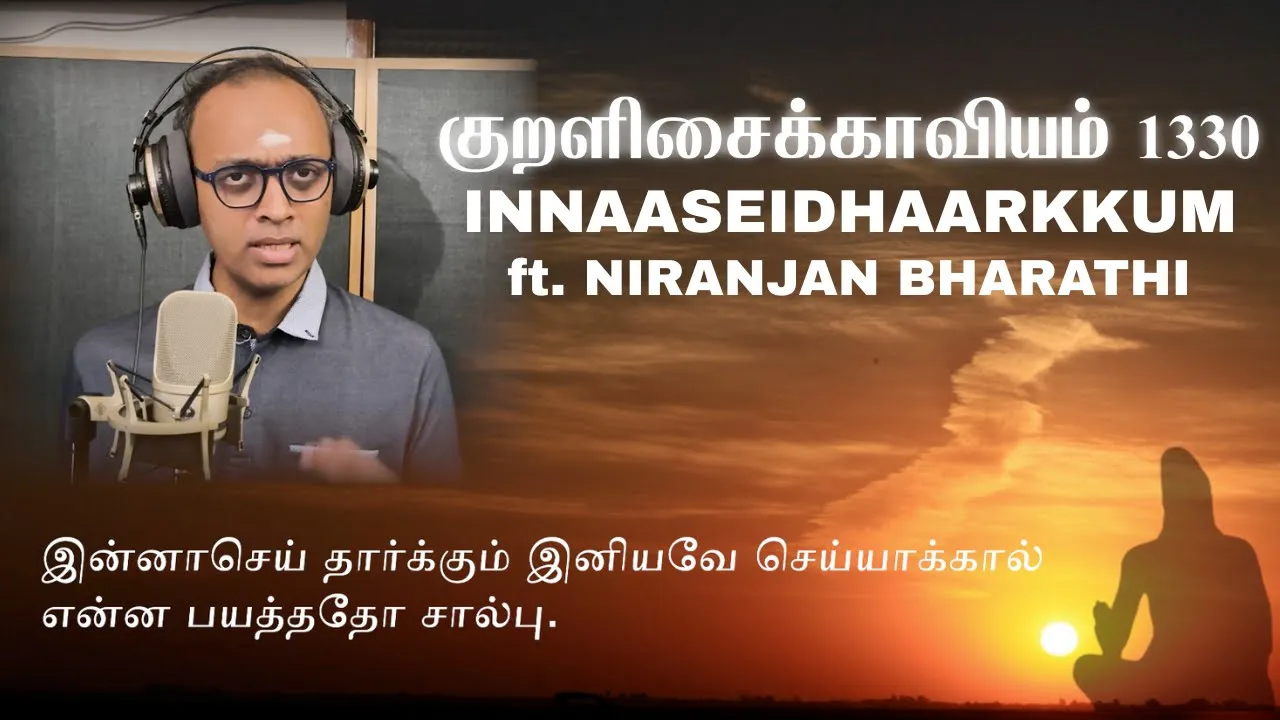
இன்னாசெய் தார்க்கும் இனியவே செய்யாக்கால்என்ன பயத்ததோ சால்பு.
innAsey tArkkum iniyavE seyyAkkAlenna payattatO sAlpu
Niranjan Bharathi
பொருள் / உரை
முருகா எளிய உரை
தமக்குத் துன்பமும் அநீதியும் இழைத்தவர்களுக்கும் பதிலுக்கு நன்மையும் உதவியுமே செய்யாவிட்டால், சான்றாண்மை என்னும் பெருங்குணத்தினால் என்ன பயன் உண்டாகும்? தீமை செய்தவருக்கும் நன்மையே செய்வதே சான்றாண்மையின் இயல்பாகும்.
• இன்னா செய்தார்க்கும் = தமக்குத் துன்பமும் தீமையும் செய்தவர்க்கும் கூட,• இனியவே செய்யாக்கால் = நன்மைகளையும் உதவிகளையுமே செய்யாமல் போனால்,• சால்பு = ஒருவரிடம் உள்ள சான்றாண்மை என்னும் பெருங்குணம்,• என்ன பயத்தது = வேறு என்ன நற்பயனைத் தந்துவிடும்? (ஒரு பயனும் தராது).
Murugaa simple commentary
If one does not do good and help in return even to those who inflicted suffering and injustice on oneself, what benefit will arise from the great virtue of nobility of character? Doing only good even to those who did harm is the nature of nobility of character.
• Even to those who did harm = Even to those who caused suffering and harm to oneself,• If one does not do pleasant things = If one does not do good deeds and help,• Nobility = The great virtue called nobility of character in a person,• What is the benefit = What other good benefit will it yield? (It will yield no benefit).
Machine translation from the Tamil
மு.வரதராசன்
துன்பமானவற்றைச் செய்தவர்க்கும் இனிய உதவிகளைச் செய்யா விட்டால், சான்றோரின் சால்பு என்ன பயன் உடையதாகும்.
பரிமேலழகர்
இன்னா செய்தார்க்கும் இனியவே செய்யக்கால் - தமக்கு இன்னாதவற்றைச் செய்தார்க்கும் சால்புடையார் இனியவற்றைச் செய்யாராயின்; சால்பு என்ன பயத்தது - அச்சால்பு வேறு என்ன பயனை உடைத்து? (சிறப்பு உம்மை அவர் இன்னாசெய்தற்கு இடனாதல் விளக்கி நின்றது. ஓகாரம், அசை. வினா எதிர்மறைப் பொருட்டு. தாமும் இன்னா செய்வராயின், சால்பால் ஒரு பயனுமில்லை என்பதாம். இவை ஐந்து பாட்டானும் சிறப்பு வகையால் கூறப்பட்டது.)
Parimelazhagar
If one does not do only pleasant things even to those who did harm, that is, if those who possess nobility do not do pleasant things even to those who did harmful things to them; what benefit did nobility yield, what other benefit does that nobility possess? (The particle 'um' of distinction stood explaining their being a locus for doing harm. The letter 'o' is an expletive syllable. The question is for a negative meaning. It means that if they themselves also do harm, there is no benefit at all from nobility. By these five verses, it was stated by way of distinction.)
Machine translation from the Tamil
சாலமன் பாப்பையா
தமக்குத் தீமை செய்தவர்க்கும் நன்மையே செய்யா விட்டால் சான்றான்மையினால் பயன்தான் என்ன?
Meaning in English
What fruit doth your perfection yield you, say! Unless to men who work you ill good repay