
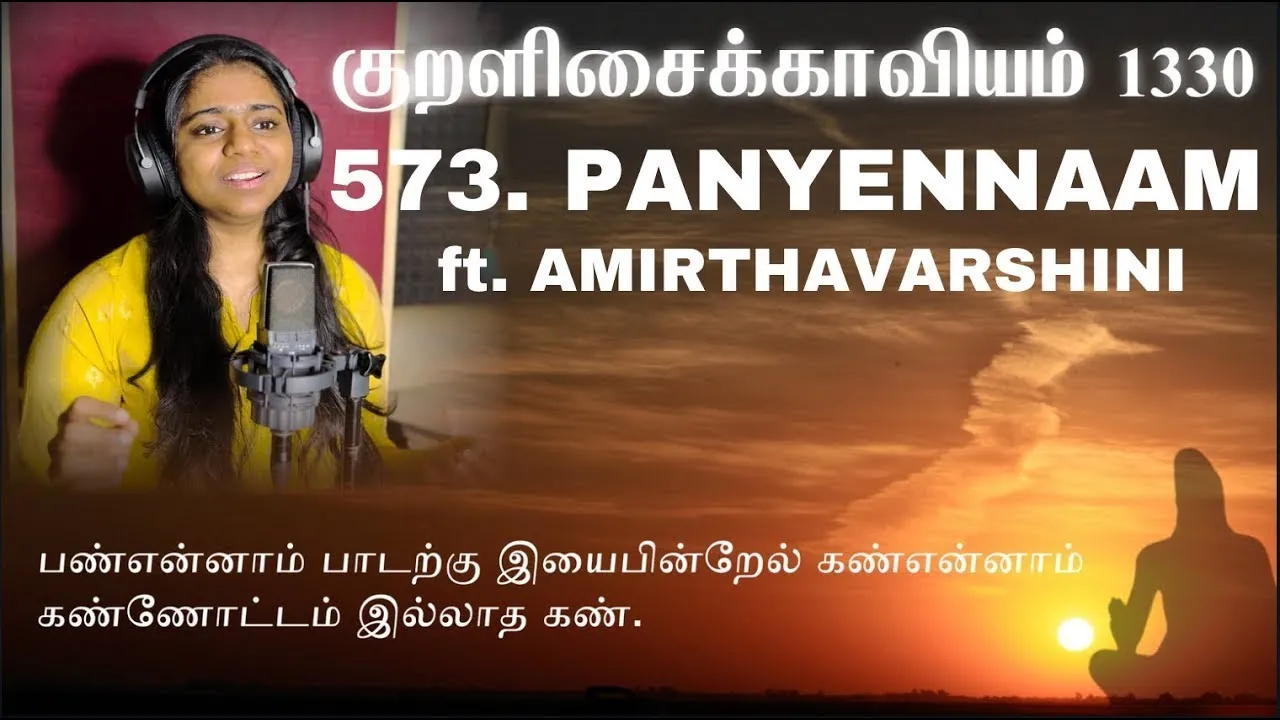
பண்என்னாம் பாடற்கு இயைபின்றேல் கண்என்னாம்கண்ணோட்டம் இல்லாத கண்.
paNNennAm pATaR kiyaipinRER kaNNennAngkaNNOTTam illAta kaN
Amirthavarshini
பொருள் / உரை
முருகா எளிய உரை
பாடலின் கருத்தோடு பொருந்தாத இசையினால் எந்தப் பயனும் இல்லை; அதுபோலவே, பிறரிடம் அன்பும் பரிவும் காட்டும் 'கண்ணோட்டம்' இல்லாத கண்களால் மனிதனுக்கு என்ன பயன் விளையப் போகிறது?
• பாடற்கு இயைபின்றேல் = பாடலின் கருத்தோடு பொருந்தாவிட்டால்,• பண் என்னாம் = இசையினால் என்ன பயன் உண்டாகும்?• கண்ணோட்டம் இல்லாத கண் = அதுபோலவே இரக்கமும் பரிவும் காட்டாத இடத்தில்,• கண் என்னாம் = மனிதனின் கண்களால் என்ன பயன் உண்டு?
Murugaa simple commentary
There is no benefit at all from music that does not accord with the theme of the song; similarly, what benefit will accrue to a human from eyes without 'graciousness' that shows love and compassion toward others?
• If not in harmony with the song = If it does not accord with the theme of the song,• Of what use is melody = What benefit will arise from music?• An eye without graciousness = In the same way, in a place where mercy and compassion are not shown,• Of what use is an eye = What use is there from a human's eyes?
Machine translation from the Tamil
மு.வரதராசன்
பாடலோடு பொருந்துதல் இல்லையானால் இசை என்ன பயனுடையதாகும், அதுபோல் கண்ணோட்டம் இல்லாவிட்டால் கண் என்ன பயனுடையதாகும்.
பரிமேலழகர்
பண் என்னாம் பாடற்கு இயைபு இன்றேல் - பண் என்ன பயத்ததாம் பாடல் தொழிலோடு பொருத்தமின்றாயின்; கண் என்னாம் கண்ணோட்டம் இல்லாத கண் - அதுபோலக் கண் என்ன பயத்ததாம் கண்ணோட்டமில்லாத இடத்து. ('பண்', 'கண்' என்பன சாதிப்பெயர், பண்களாவன: பாலையாழ் முதலிய நூற்றுமூன்று. பாடல் தொழில்களாவன: யாழின்கண் வார்தல் முதலிய எட்டும், பண்ணல் முதலிய எட்டும், மிடற்றின்கண் எடுத்தல், படுத்தல், நலிதல், கம்பிதம், குடிலம் என்னும் ஐந்தும், பெருவண்ணம், இடை வண்ணம், வனப்பு வண்ணம் முதலிய வண்ணங்கள் எழுபத்தாறுமாம். இவற்றோடு இயையாதவழிப் பண்ணால் பயன் இல்லாதவாறுபோலக் கண்ணோட்டத்து இயையாத வழிக் கண்ணால் பயனில்லை என்பதாம். கண் சென்ற வழி நிகழ்தல் பற்றி அதனை இடமாக்கினார். இறுதிக்கண் 'கண்' என்பதனைக் 'கண்ணகல் ஞாலம்' (திரிகடுகம் 1) என்புழிப் போலக் கொள்க.)
Parimelazhagar
Pan ennam patarku iyaipu inrel, of what use is a melody if it does not accord with the act of singing; kan ennam kannotam illatha kan, likewise, of what use is an eye in a place where there is no graciousness of the eye. ('Pan' and 'kan' are generic nouns. The melodies are one hundred and three, beginning with palaiyazh. The acts of singing are the eight beginning with varthal on the lute, the eight beginning with pannal, the five in the throat called eduthal, paduthal, nalithal, kampitham, and kudilam, and the seventy-six rhythmic variations such as peruvannam, idaivannam, and vanappuvannam. The meaning is that just as there is no use of a melody when it does not accord with these, there is no use of the eye when it does not accord with graciousness of the eye. Because it occurs where the eye goes, he treated that as the place. Take the word 'kan' at the end as in 'kannakal jnalam' (Thirikadugam 1).)
Machine translation from the Tamil
சாலமன் பாப்பையா
பாடப்படும் பாடலுக்குப் பொருந்தவில்லை என்றால் ராகத்தால் என்ன பயன்? அதுபோல கண்ணோட்டம் இல்லை என்றால் கண்ணால்தான் என்ன பயன்?
Meaning in English
Where not accordant with the song, what use of sounding chords What gain of eye that no benignant light affords