
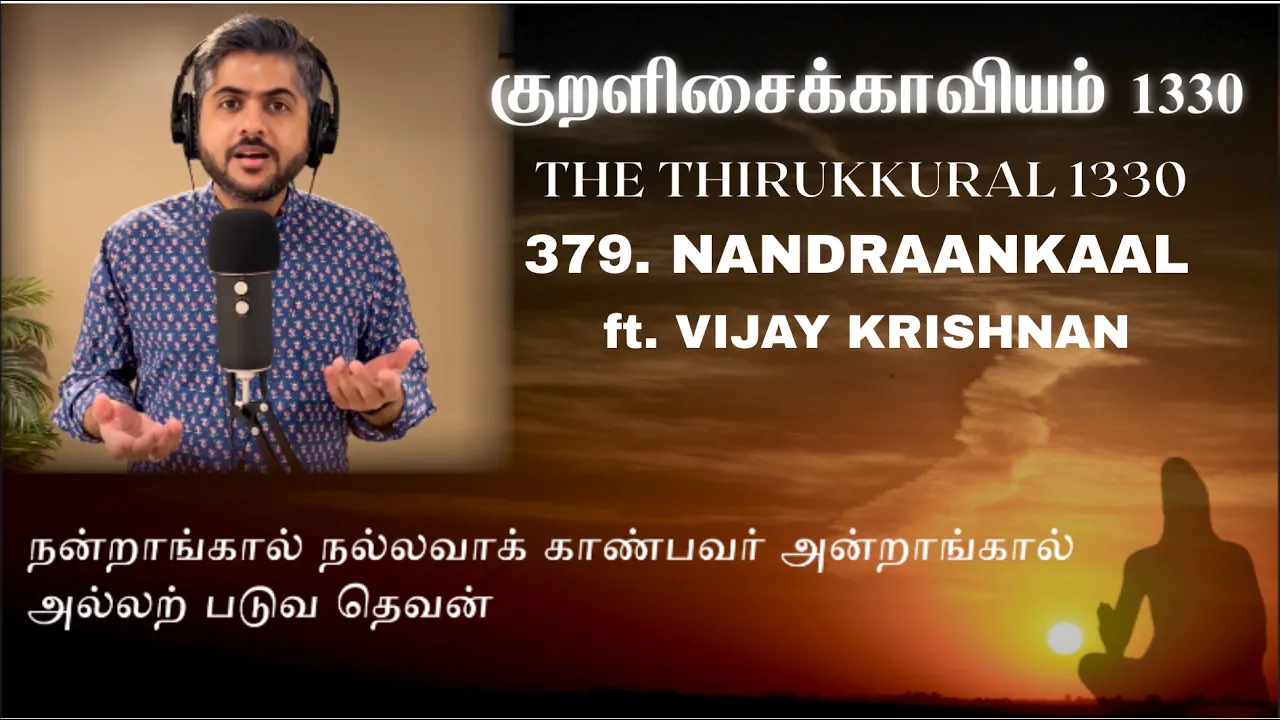
நன்றாங்கால் நல்லவாக் காண்பவர் அன்றாங்கால்அல்லற் படுவ தெவன்.
nanRAngkAl nallavAk kANpavar anRAngkAlallaR paTuva tevan
Vijay Krishnan
பொருள் / உரை
முருகா எளிய உரை
நல்வினை வரும் போது அதனை விரும்பி ஏற்று மகிழ்ச்சி அடையும் மனிதர்கள், அதற்கு மாறாகத் தீவினை வரும் போது மட்டும் கலங்கித் துயரப்படுவது ஏன்? (முற்பிறவியில் தாமே செய்த வினைகளின் பயன் என்பதால் இரண்டையுமே சமநோக்குடன் ஏற்க வேண்டும்).
• நன்று ஆங்கால் = நல்வினைப் பயனால் இன்பமும் நன்மைகளும் கூடிவரும் போது,• நல்லவாக் காண்பவர் = அவற்றை விரும்பி ஏற்று மகிழ்ச்சியோடு அனுபவிக்கின்ற மனிதர்கள்,• அன்று ஆங்கால் = தீவினைப் பயனால் அதற்கு மாறாகத் துன்பமும் இழப்பும் நேரும் போது,• அல்லற்படுவது எவன் = அதையும் தன் வினைப்பயன் என்று ஏற்காமல் வருந்திக் கலங்குவது ஏன்? (இரண்டையுமே சமமாக ஏற்க வேண்டும்).
Murugaa simple commentary
When good deeds come, why do people who willingly accept it and rejoice, get distressed and grieve only when bad deeds come contrary to that? (Since both are the fruit of deeds done by oneself in a past birth, both must be accepted with an equal perspective).
• When good happens = When pleasure and benefits come together as the result of good deeds,• Those who see it as good = People who willingly accept them and experience them with joy,• When the opposite happens = When, contrary to that, suffering and loss occur as the result of bad deeds,• Why be afflicted = Why grieve and be distressed without accepting that too as the fruit of one's deeds? (Both must be accepted equally).
Machine translation from the Tamil
மு.வரதராசன்
நல்வினை விளையும் போது நல்லவை எனக் கருதி மகிழ்கின்றனர், தீவினை விளையும் போது துன்பப்பட்டுக் கலங்குவது ஏனோ.
பரிமேலழகர்
நன்று ஆங்கால் நல்லவாக் காண்பவர் - நல்வினை விளையுங்கால், அதன் விளைவாய இன்பங்களைத் துடைக்கும் திறன் நாடாது, இவை நல்ல என்று இயைந்து அனுபவிப்பார், அன்று ஆங்கால் அல்லற்படுவது எவன் - ஏனைத் தீவினை விளையுங்கால் அதன் விளைவாய துன்பங்களையும் அவ்வாறு அனுபவியாது, துடைக்கும் திறன் நாடி அல்லல் உழப்பது என் கருதி? (தாமே முன் செய்து கொண்டமையானும், ஊட்டாது கழியாமையானும், இரண்டும் இயைந்து அனுபவிக்கற்பால, அவற்றுள் ஒன்றிற்கு இயைந்து அனுபவித்து, ஏனையதற்கு அது செய்யாது வருந்துதல் அறிவன்று என்பதாம். இவை மூன்று பாட்டானும் இன்பத்துன்பங்கட்குக் காரணமாய ஊழின் வலி கூறப்பட்டது.)
Parimelazhagar
Those who view things as good when good occurs, when good karma matures, without seeking a way to wipe out the pleasures that are its fruit, accept and experience them saying that these are good, why do they suffer when bad occurs, when the other, bad karma matures, without experiencing the sufferings that are its fruit in the same way, with what thought do they suffer distress seeking a way to wipe them out? (Because they themselves performed them earlier, and because they do not pass away without making one experience them, both are fit to be accepted and experienced, among them, accepting and experiencing one, and grieving without doing so for the other is not wisdom. By these three verses, the strength of fate, which is the cause of pleasure and suffering, was stated.)
Machine translation from the Tamil
சாலமன் பாப்பையா
நல்லது நடக்கும்போது மட்டும் நல்லது என அனுபவிப்பவர், தீயது நடக்கும்போது மட்டும் துன்பப்படுவது ஏன்?
Meaning in English
When good things come, men view them all as gain; When evils come, why then should they complain