
நில்லாத வற்றை நிலையின என்றுணரும்புல்லறி வாண்மை கடை.
nillAta vaRRai nilaiyina enRuNarumpullaRi vANmai kaTai
Sreekanth Hariharan
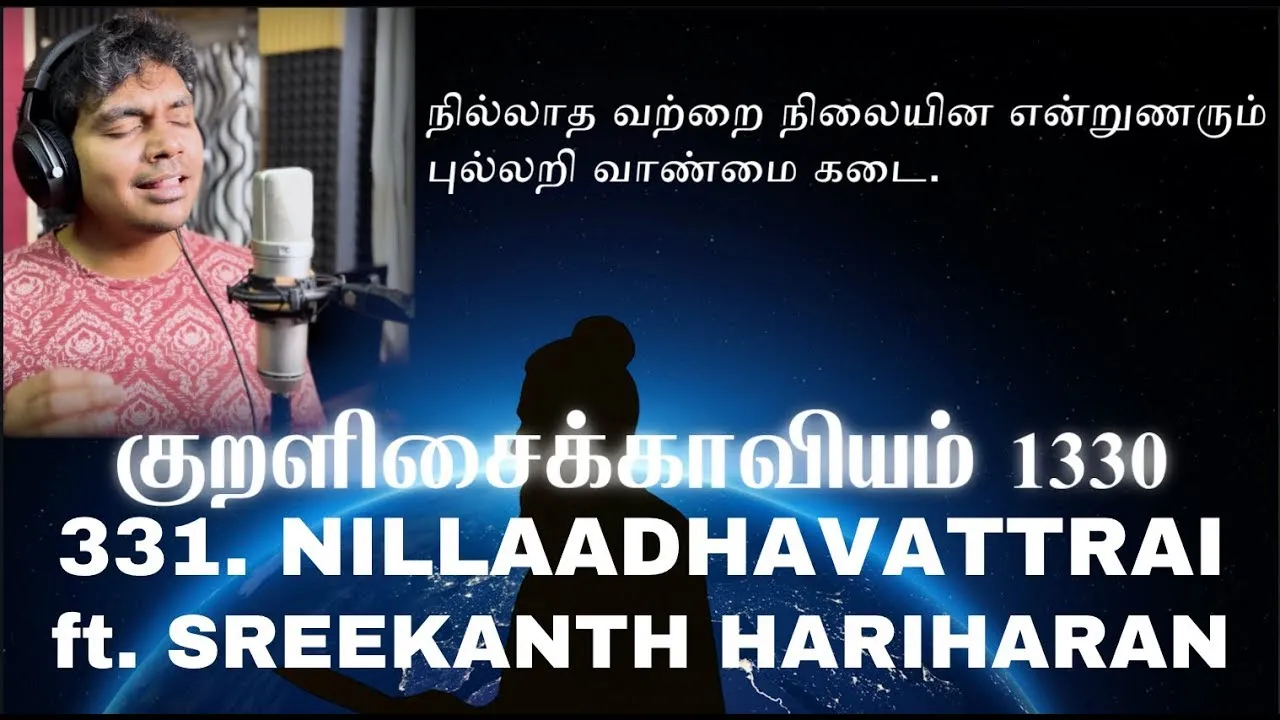
பொருள் / உரை
முருகா எளிய உரை
எந்நேரமும் அழியக்கூடிய நிலையில்லாத உலகப் பொருட்கள், செல்வம், உடம்பு ஆகியவற்றை நிரந்தரமானவை என்று நம்பி மயங்கும் அற்ப அறிவானது, மனித அறிவிலேயே மிக இழிவான அறியாமையாகும்.
• நில்லாதவற்றை = நிலையில்லாமல் அழியக்கூடிய உலகப் பொருட்கள், செல்வம், உடம்பு ஆகியவற்றை• நிலையின என்று உணரும் = எப்போதும் அழியாமல் நிலையாக இருக்கக்கூடியவை என்று மயங்கி நம்பும்• புல்லறிவு ஆண்மை = அற்பமான மயக்க அறிவைக் கொண்டிருப்பது• கடை = மனித அறிவிலேயே மிகக் கீழான இழிவான அறியாமையாகும்.
Murugaa simple commentary
The petty intellect that delusionally believes impermanent worldly objects, wealth, and the body, which can perish at any moment, to be permanent, is the most disgraceful ignorance in human intellect.
• Things that do not last = worldly objects, wealth, and the body, which perish without permanence• Believing them to be permanent = delusionally believing that they are permanent things that never perish• Possessing petty intellect = having a petty, deluded knowledge• The lowest = is the lowest, disgraceful ignorance in human intellect.
Machine translation from the Tamil
மு.வரதராசன்
நிலையில்லாதவைகளை நிலையானவை என்று மயங்கி உணரும் புல்லறிவு உடையவராக இருத்தல் வாழ்க்கையில் இழிந்த நிலையாகும்.
பரிமேலழகர்
நில்லாதவற்றை நிலையின என்று உணரும் புல்லறிவு ஆண்மை -நிலையுதல் இலவாகிய பொருள்களை நிலையுதல் உடையஎன்று கருதுகின்ற புல்லிய அறிவினை உடையராதல்; கடை -துறந்தார்க்கு இழிபு. (தோற்றம் உடையவற்றைக் கேடில என்று கருதும் புல்லறிவால் அவற்றின்மேல் பற்றுச் செய்தல் பிறவித்துன்பத்திற்கு ஏதுவாகலின், அது வீடுஎய்துவார்க்கு இழுக்கு என்பது இதனால் கூறப்பட்டது. இனி புல்லறிவாளர் பெரும்பான்மையும் பற்றிச் செய்து சிற்றின்பத்துக்கு ஏதுவாகிய செல்வத்தின் கண்ணும், அதனை அனுபவிக்கும் யாக்கையின் கண்ணும் ஆகலின், வருகின்ற பாட்டுகளான் அவற்றது நிலையாமையை விதந்து கூறுப.)
Parimelazhagar
Possessing the base knowledge that perceives things that do not endure as enduring, having the base knowledge that regards things without permanence as having permanence; is the lowest, a disgrace to those who have renounced. (Because forming attachment to things that have an origin, through the base knowledge that regards them as imperishable, is the cause of the suffering of birth, it is stated by this that it is a fault for those who would attain liberation. Next, since the attachment formed for the most part by those of base knowledge is toward wealth, which is the cause of petty pleasure, and toward the body, which enjoys it, in the following verses their impermanence will be specifically stated.)
Machine translation from the Tamil
சாலமன் பாப்பையா
நிலை இல்லாத பொருள்களை நிலையானவை என்று எண்ணும் அற்ப அழிவு இழிவானது.
Meaning in English
Lowest and meanest lore, that bids men trust secure, In things that pass away, as things that shall endure