
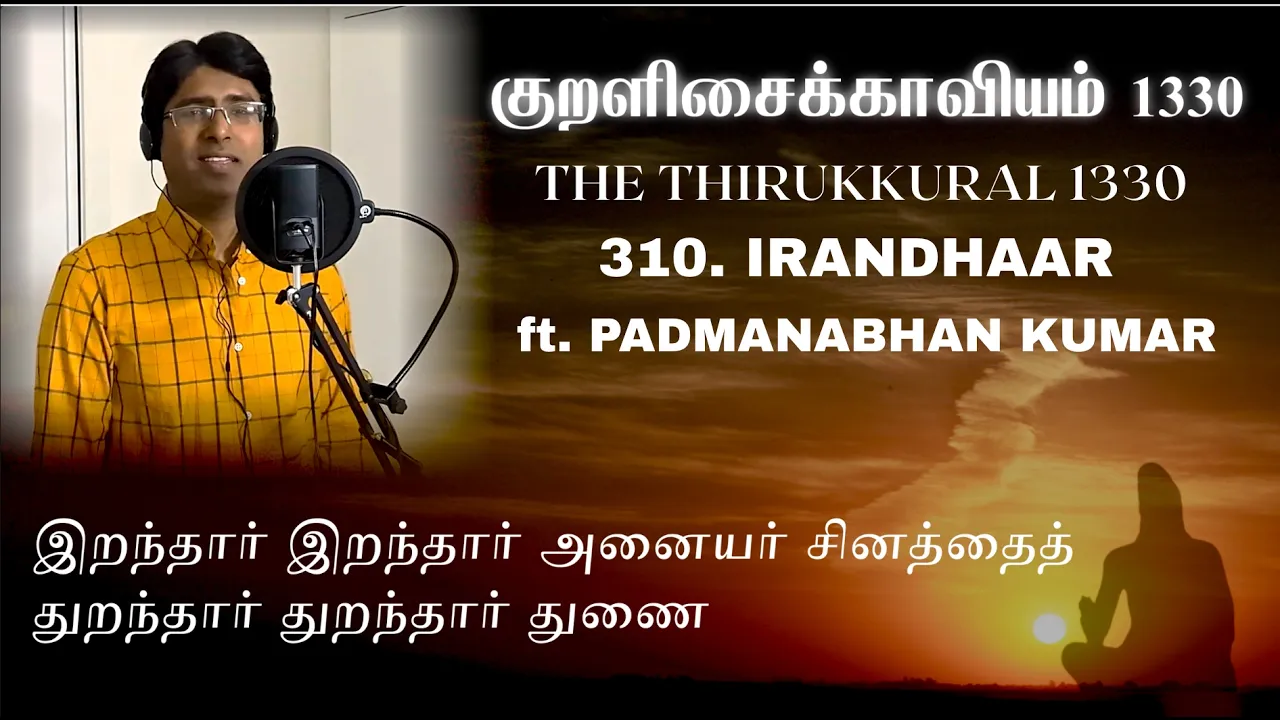
இறந்தார் இறந்தார் அனையர் சினத்தைத்துறந்தார் துறந்தார் துணை.
iRantAr iRantA ranaiyar sinattaittuRantAr tuRantAr tuNai
Padmanabhan Kumar
பொருள் / உரை
முருகா எளிய உரை
எல்லையற்ற பெருங்கோபத்தில் ஆழ்பவர்கள் உயிரோடு வாழ்ந்தாலும் செத்த பிணங்களுக்கு ஒப்பாவார்கள்; ஆனால் சினத்தை அடியோடு துறந்தவர்கள் சாவற்ற முக்தி நிலையை அடைந்த உன்னத ஞானிகளுக்கு ஒப்பானவர்கள் ஆவர்.
• இறந்தார் = சினத்தில் எல்லை கடந்து வெறிபிடித்து வாழ்பவர்கள்• இறந்தார் அனையர் = உடலில் உயிர் இருந்தாலும் செத்துப்போன பிணங்களுக்கு ஒப்பானவர்கள் ஆவர்;• சினத்தைத் துறந்தார் = கோபத்தை அடியோடு விட்டொழித்த சான்றோர்கள்• துறந்தார் துணை = பிறவிப் பிணியை ஒழித்து முக்தியடைந்த மேலான துறவியருக்கு ஒப்பானவர்கள் ஆவர்.
Murugaa simple commentary
Those who plunge into boundless great anger are equal to dead corpses even though they live alive; but those who completely renounce anger are equal to noble sages who attained the deathless state of liberation.
• Those who crossed the limit = those who cross the limit in anger and live possessed by frenzy• Are like the dead = are equal to dead corpses, even though life is in the body;• Those who renounced anger = the noble who completely abandoned anger• Equal to those who renounced = are equal to exalted ascetics who eradicated the affliction of birth and attained liberation.
Machine translation from the Tamil
மு.வரதராசன்
சினத்தில் அளவு கடந்து சென்றவர் இறந்தவரைப் போன்றவர், சினத்தை அடியோடு துறந்தவர் துறந்தவர்க்கு ஒப்பாவர்.
பரிமேலழகர்
இறந்தார் இறந்தார் அனையர் - சினத்தின் கண்ணே மிக்கார் உயிருடையராயினும் செத்தாரோடு ஒப்பர், சினத்தைத் துறந்தார் துறந்தார் துணை - சினத்தைத் துறந்தார் சாதல் தன்மையராயினும், அதனை ஒழிந்தார் அளவினர். (மிக்க சினத்தை உடையார்க்கு ஞானம் எய்துதற்கு உரிய உயிர் நின்றதாயினும் , கலக்கத்தான் அஃது எய்தாமை ஒருதலையாகலின் அவரை வீடு பெற்றாரோடு ஒப்பர் என்றும் கூறினார். இதனான் அவ்விருவர் பயனும் ஒருங்கு கூறப்பட்டது.)அஃதாவது, தனக்கு ஒரு பயன் நோக்கியாதல் ,செற்றம் பற்றியாதல். சோர்வானாதல் ஓர் உயிர்க்கு இன்னாதவற்றைச் செய்யாமை. இன்னா செய்தல் வெகுளி ஒழியவும் நிகழும் என்பது அறிவித்தற்கு , இது வெகுளாமையின்பின் வைக்கப்பட்டது.)
Parimelazhagar
Those who exceed are like the dead, those who exceed in anger, though possessing life, resemble the dead, those who have renounced anger are equal to the renounced, those who have renounced anger, though of the nature of dying, are of the measure of those who have rid themselves of it. (Though for those who have excessive anger the life fit for attaining wisdom remains, since due to confusion not attaining it is certain, he also said they resemble those who have attained liberation. By this the fruit of both of them was stated together.) That is, whether looking for a benefit for oneself, or out of hatred, or through negligence, not doing painful things to a living being. To make known that doing harm occurs even apart from anger, this was placed after non-anger.)
Machine translation from the Tamil
சாலமன் பாப்பையா
பெருங்கோபம் கொண்டவர் இருந்தாலும் இறந்தவரைப் போன்றவரே; கோபத்தை விட்டுவிட்டவர். இறக்க வேண்டியவரே என்றாலும் சாவைத் தவிர்த்தவர் போன்றவரே.
Meaning in English
Men of surpassing wrath are like the men who've passed away; Who wrath renounce, equals of all-renouncing sages they