
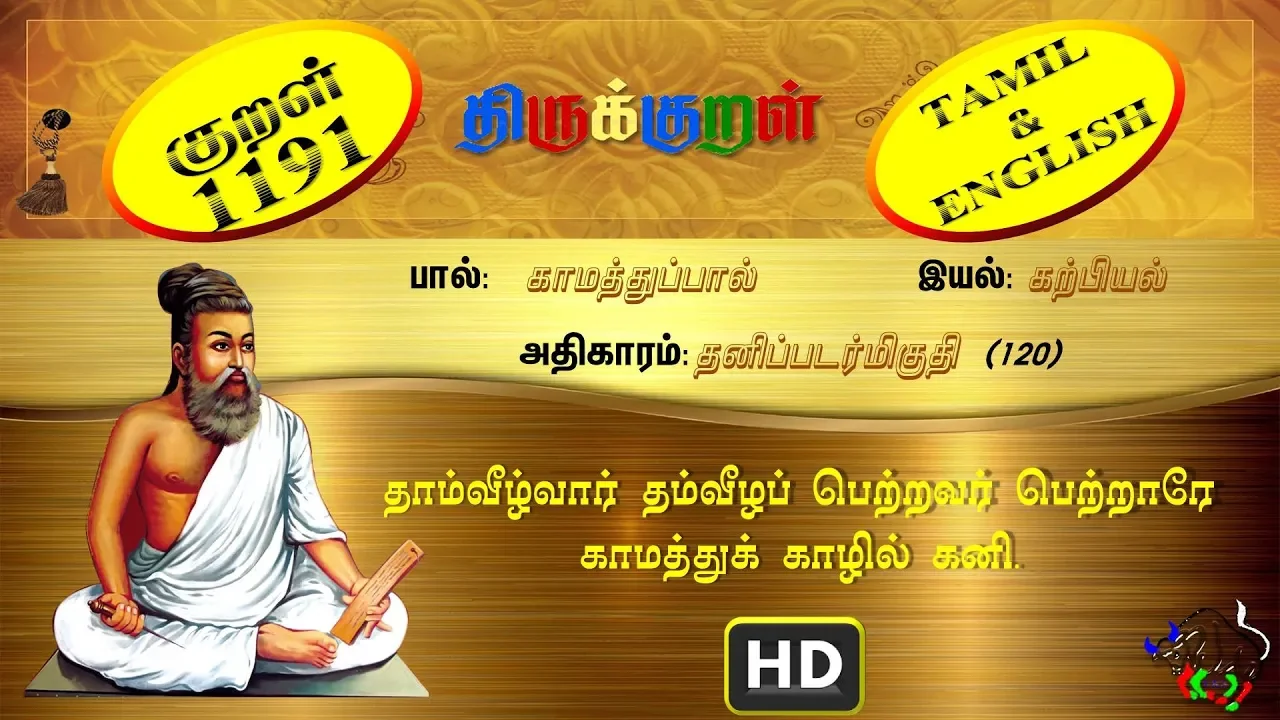
தாம்வீழ்வார் தம்வீழப் பெற்றவர் பெற்றாரேகாமத்துக் காழில் கனி.
tAmvIzhvAr tamvIzhap peRRavar peRRArEkAmattuk kAzhil kani
திருக்குறள் / THIRUKKURAL
பொருள் / உரை
முருகா எளிய உரை
தாம் விரும்பும் காதலரால் தாமும் அதேபோல விரும்பிப் போற்றப்படும் நல்ல பேற்றினைப் பெற்ற பெண்கள், காதல் வாழ்க்கையின் பயனாகிய கொட்டையோ கடினமான விதையோ இல்லாத தித்திக்கும் கனியைப் பெற்றவர் ஆவார்கள்!
• தாம் வீழ்வார் = தாம் விரும்பும் காதலரால்,• தம் வீழப் பெற்றவர் = தாமும் அதேபோலத் திரும்ப விரும்பப்படும் பேற்றினைப் பெற்ற பெண்கள்;• காமத்துக் காழ் இல் கனி = காதல் இன்பம் என்னும் கொட்டையோ விதையோ இல்லாத சுவையான பழத்தைப்,• பெற்றாரே = முழுமையாகப் பெற்றவர் ஆவார்கள்!
Murugaa simple commentary
Women who have obtained the good blessing of being loved and cherished in the same way by the lover they desire, are those who have obtained the sweet fruit without a nut or hard seed that is the fruit of love life!
• Those they love = by the lover they desire,• Those who have obtained being loved by them = women who have obtained the blessing of being loved back in the same way;• Fruit without seed of love = the delicious fruit without a nut or seed, namely the pleasure of love,• Have obtained = are those who have fully obtained!
Machine translation from the Tamil
மு.வரதராசன்
தாம் விரும்பும் காதலர் தம்மை விரும்புகின்ற பேறு பெற்றவர், காதல் வாழ்க்கையின் பயனாகிய விதை இல்லாத பழத்தைப் பெற்றவரே ஆவார்.
பரிமேலழகர்
('காதலரும் நின்னினும் ஆற்றாராய்க் கடிதின் வருவர், நீ அவரோடு பேரின்பம் நுகர்தி', என்ற தோழிக்குச் சொல்லியது.) தாம் வீழ்வார் தம் வீழப் பெற்றவர் - தம்மாற் காதலிக்கப்படும் கணவர் தம்மைக் காதலிக்கப்பெற்ற மகளிர்; பெற்றாரே காமத்துக் காழ்இல் கனி - பெற்றாரன்றே காம நுகர்ச்சி என்னும் பரல் இல்லாத கனியை. (காமம்: ஆகுபெயர். 'அத்து' அல்வழிக்கண் வந்தது. முன்னை நல்வினை இல்வழிப் பெறப்படாமையின் 'பெற்றார்' என்றும், அவரால் தடையின்றி நுகரப்படுதலின் 'காழில் கனி' என்றும் கூறினாள். 'நம் காதலர் பிரிதலேயன்றிப் பின் வாராமையும் உடைமையின் அக்கனி யாம் பெற்றிலேம்' என்பதாயிற்று.)
Parimelazhagar
(Said to the female friend who said, 'The lover also, being even less able to bear it than you, will come quickly, and you will enjoy great bliss with him.') Those who have attained being loved by those whom they love, women who have attained being loved by the husbands who are loved by them; have attained the seedless fruit of love, have they not indeed attained the seedless fruit that is the enjoyment of love. (Kamam, love: metonymy. 'Atthu' occurred in a non-case relation. Because it cannot be obtained without past good deeds, she said 'have attained', and because it is enjoyed by them without hindrance, she said 'seedless fruit'. This means, 'Since our lover not only parts, but also has the quality of not coming back afterwards, we have not attained that fruit'.)
Machine translation from the Tamil
சாலமன் பாப்பையா
தாம் விரும்புபவராலேயே விரும்பப்பட்ட பெண்கள்தாம் காதல் இன்பம் என்னும் விதை இல்லாத கனியைப் பெற்றவர் ஆவர்.
Meaning in English
The bliss to be beloved by those they love who gains, Of love the stoneless, luscious fruit obtains