
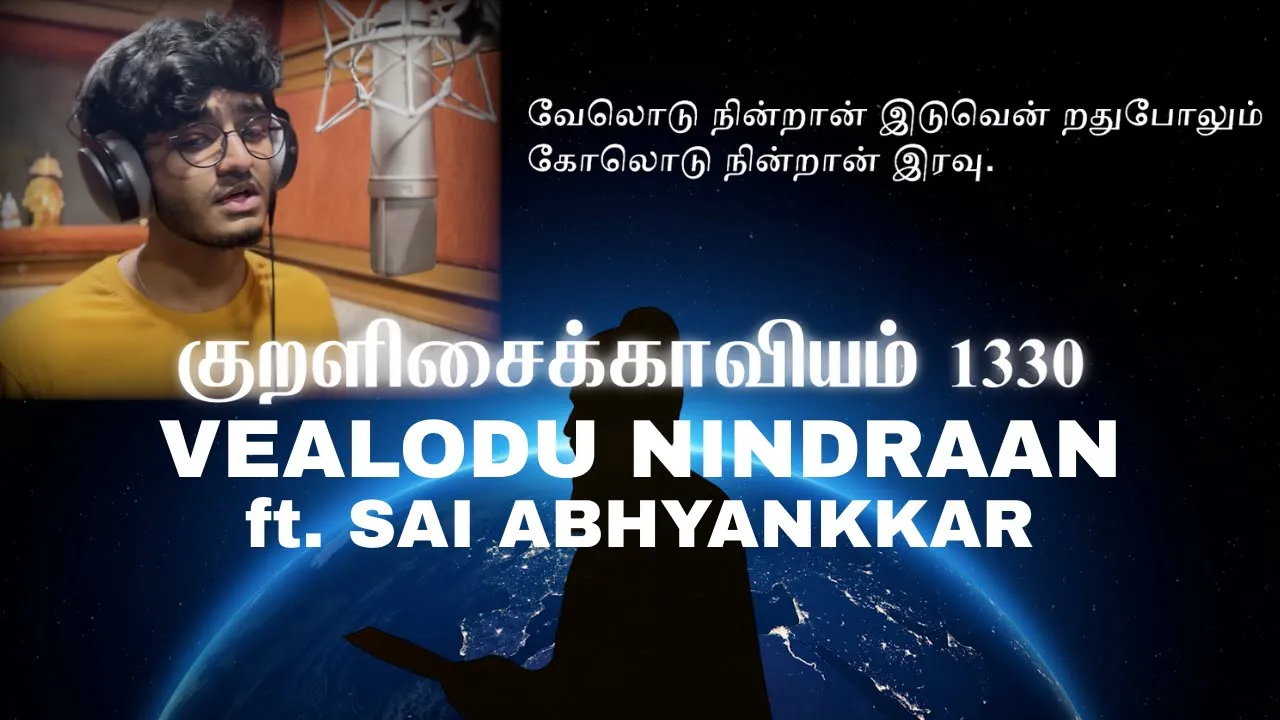
வேலொடு நின்றான் இடுவென் றதுபோலும்கோலொடு நின்றான் இரவு.
vEloTu ninRAn iTuven RatupOlumkOloTu ninRAn iravu
Sai Abhyankkar
பொருள் / உரை
முருகா எளிய உரை
அதிகார பலம் கொண்ட ஓர் ஆட்சியாளன் தன் குடிமக்களிடம் அநீதியாகக் கூடுதல் பொருள் கேட்டுப் பறிப்பது, தனிவழியில் வேல் ஏந்தி நிற்கும் கொள்ளையன் வழிப்போக்கனை மிரட்டிப் 'பொருளைக் கொடு' என்று வழிப்பறி செய்வதற்கு முற்றிலும் சமமாகும்.
• கோலொடு நின்றான் இரவு = அதிகாரமும் கோலும் கொண்ட ஆட்சியாளன் குடிமக்களிடம் அநீதியாகப் பொருள் கேட்பது,• வேலொடு நின்றான் = தனிவழியில் வேல் ஏந்தி நிற்கும் கொள்ளையன்,• இடு என்றது போலும் = வழிப்போக்கனிடம் 'பொருளைக் கொடு' என்று மிரட்டுவதற்கு முற்றிலும் சமமாகும்.
Murugaa simple commentary
A ruler possessing power of authority demanding and seizing additional wealth unjustly from his citizens is completely equal to a robber standing holding a spear on a solitary path threatening a wayfarer and committing highway robbery, saying 'give the wealth'.
• One who stands with a sceptre, begging = A ruler possessing authority and a sceptre asking for wealth unjustly from citizens,• One who stands with a spear = A robber standing holding a spear on a solitary path,• Like saying 'give' = is completely equal to threatening a wayfarer, saying 'give the wealth'.
Machine translation from the Tamil
மு.வரதராசன்
ஆட்சிக்குறிய கோலை ஏந்தி நின்ற அரசன் குடிகளைப் பொருள் கேட்டல் , போகும் வழியில் கள்வன் கொடு என்று கேட்பதைப் போன்றது.
பரிமேலழகர்
வேலொடு நின்றான் - ஆறலைக்கும் இடத்துத்தனியே வேல் கொண்டு நின்ற கள்வன், இடு என்றது போலும் - ஆறுசெல்வானை 'நின் கைப்பொருள் தா' என்று வேண்டுதலோடுஒக்கும், கோலொடு நின்றான் இரவு - ஒறுத்தல் தொழிலோடு நின்றஅரசன் குடிகளைப் பொருள் வேண்டுதல். ('வேலொடு நின்றான்' என்றதனால் பிறரொடு நில்லாமையும், 'இரவு' என்றதனால்இறைப்பொருள் அன்மையும் பெற்றாம், தாராக்கால்ஒறுப்பல் என்னும் குறிப்பினன் ஆகலின் இரவாற் கோடலும் கொடுங்கோன்மைஆயிற்று,இவை இரண்டு பாட்டானும் கொடுங்கோன்மையதுகுற்றம் கூறப்பட்டது.)
Parimelazhagar
He who stood with a spear, a thief who stood alone holding a spear at a place of waylaying, is like saying 'give', it is equal to demanding of a wayfarer, 'Give the property in your hand', the begging of him who stood with a sceptre, a king who stands with the work of punishing demanding wealth from his subjects. (By saying 'he who stood with a spear', his not standing with others, and by saying 'begging', its not being tribute due to a king, are obtained, since he has the intention, 'if it is not given, I will punish', taking even by begging becomes tyranny, by these two verses the fault of tyranny was stated.)
Machine translation from the Tamil
சாலமன் பாப்பையா
தண்டிக்கும் இயல்போடு ஆட்சியாளன் தன் குடிகளிடம் வரி கேட்பது, ஆயுதத்தைப் பிடித்துக் கொண்டு நெடுவழிப் பயணிகளிடம் பணத்தைப் போடு என்று மிரட்டுவதற்குச் சமம்.
Meaning in English
As 'Give' the robber cries with lance uplift, So kings with sceptred hand implore a gift